
Spin Miner: Idle Gold Tycoon
Supercent, Inc.Simulation
4.4163.00 Reviews
- Version
- 24.0.0
- Installs
- 500.00K
- Age Rating
- Everyone
Screenshots
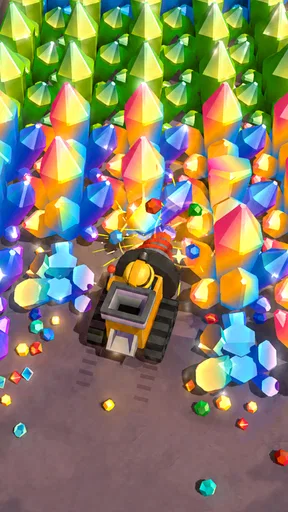
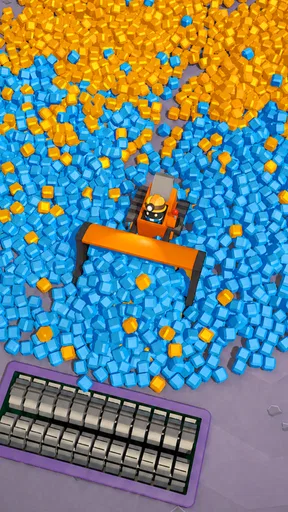
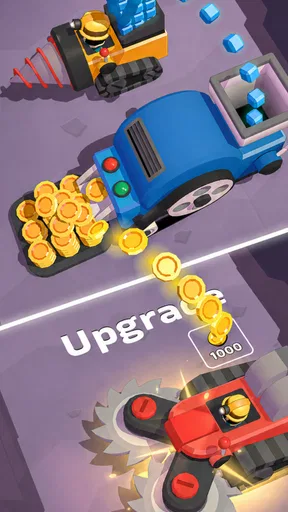
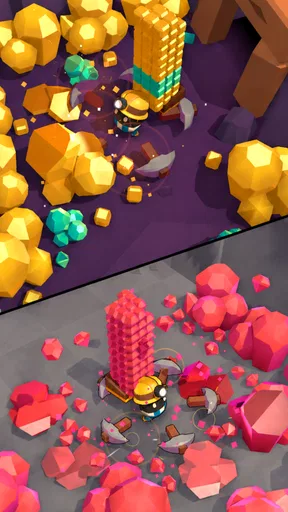
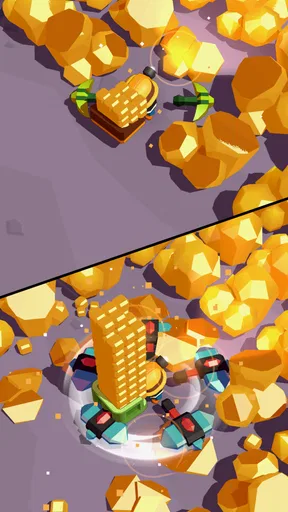
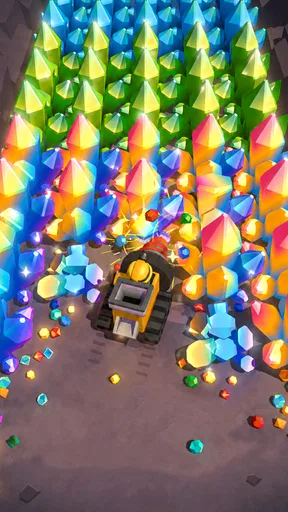
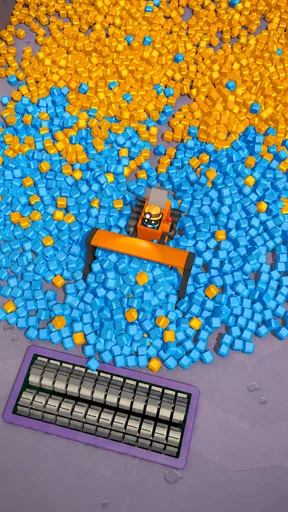
Our Review of Spin Miner: Idle Gold Tycoon
 Analysis by Appyee
Spin Miner: Idle Gold Tycoon is the kind of simulation game I open when I want progress without committing to a long play session. Its central appeal is simple: I mine gems, turn that activity into coins, and gradually build a larger operation. That loop sounds familiar, but the important part is how the game makes short visits feel worthwhile. I can make a little progress, improve my position, leave, and return later without needing to remember a complicated story or control scheme.
What I found most interesting is not the mining theme by itself, but the way the game turns idle progression into a routine. The main decision is rarely about precise movement or difficult timing. Instead, I am deciding when to collect, when to spend, and whether a short-term improvement is worth delaying a bigger upgrade. That makes it accessible, though it also means the experience depends heavily on whether I enjoy watching numbers grow more than actively solving problems.
Developed by Supercent, Inc., this free simulation game is rated Everyone, runs on Android devices using version 6.0 or later, and is currently at version 24.0.0. It has built a 4.4 average from around 8.9K ratings and has passed 500K installs. Those figures suggest that the straightforward mining-and-upgrade formula has found a sizeable audience, but they do not change the basic truth of the game: it is designed for relaxed, repetitive progress rather than deep management.
Why the idle mining loop matters
I use the idle mining loop as the lens for judging what makes this game worth revisiting: not just how quickly the operation grows, but whether each return gives me a useful choice. I’ll look at how small goals create momentum and where that easy rhythm can start to feel too passive. That makes it easier to decide whether the progression suits your day or whether a more hands-on simulation would be a better fit.
The capability that defines the experience
The strongest capability here is the ability to keep an empire-building loop moving even when I am not constantly interacting with the screen. In practice, that changes the game from a conventional mining challenge into a light management habit. I am not expected to remain focused for a full session. I can check the current state, make an upgrade, collect what is ready, and put the phone down.
That design works especially well for people who like simulation games but do not want the pressure of a timer, a competitive opponent, or a demanding control system. The reward comes from seeing the operation become more productive over repeated visits. The game’s identity is therefore less about the fantasy of personally digging for treasure and more about supervising a growing source of income.
I would describe it as an idle clicker tycoon with a mining wrapper. The gem theme gives the loop a clear visual purpose, while coins provide the practical reason to keep returning. If you expect detailed excavation, realistic geology, or a full business simulator with many interconnected departments, this will feel much lighter. If you want a low-effort progression game, the focus is much more appropriate.
What changes when progress is idle
In an active game, every minute usually depends on what I do. In Spin Miner, the value of a visit comes from making the right small intervention before leaving. A quick check can be enough to turn accumulated resources into an improvement, and that improvement can make the next return more satisfying. The result is a rhythm of brief decisions rather than one extended task.
This is useful on a busy day. I can play during a short break, close it before a meeting, and come back later without feeling that I abandoned a mission. The game also avoids asking me to learn a large ruleset before the loop makes sense. Mining leads to coins, coins support growth, and growth makes future mining feel more productive.
The trade-off is that idle design can make progress feel less personal. I am directing the process, but I am not performing every part of it. Players who enjoy manual control may see the automation as the main weakness. For me, it is the reason the game works as a casual companion rather than becoming another task that demands attention.
How I approach the first sessions
My advice is to resist spending every reward immediately. The temptation in a clicker game is to buy the first visible improvement as soon as the currency becomes available. A better approach is to pause briefly and consider whether the purchase will improve the next few visits or merely make the current screen look more advanced. Since the loop is built around repeated accumulation, upgrades that strengthen the overall rhythm are usually more satisfying than impulsive spending.
I also find it helpful to treat each opening as a small management check. First I look at what has accumulated, then I collect or convert it, and only after that do I decide what to improve. This order keeps the session organized and makes it easier to notice whether the latest change is actually helping. It is a simple habit, but it stops the game from becoming random tapping.
Because the game is free to download, it is easy to try without a financial commitment at the start. However, in-app purchases range from $0.99 to $99.99 per item, so I would set a personal spending limit before playing regularly. The free entry is appealing, but the presence of optional purchases means the most comfortable experience depends partly on how willing I am to wait for progress.
A realistic everyday scenario
Imagine I am commuting, waiting for an appointment, or taking a short lunch break. I open the game, collect the resources that have built up, convert them into coins, and choose an improvement. I may spend only a couple of minutes making that decision. Later, when I have another quiet moment, I return to see whether the operation now feels more productive.
That scenario captures the game better than a long evening session. It is not trying to replace a large console-style simulation. It fits between other activities, and the idle structure means I do not lose the value of the game simply because I cannot play continuously. For someone who likes checking a virtual business throughout the day, that is a real strength.
There is also a useful psychological benefit to this format: I can stop at a natural point. A conventional level-based game may encourage me to finish one more stage, while this one lets me collect, upgrade, and leave. That makes it a reasonable choice for people who want entertainment that does not take over an entire evening.
Where the loop starts to feel repetitive
The same structure that makes the game easy to pick up can eventually narrow its appeal. Mining, earning, and improving are satisfying when each return produces a noticeable change. Once the rhythm becomes predictable, however, the motivation depends on how much I enjoy incremental growth. If I need constant surprises, varied missions, or a strong narrative, the repetition may become tiring.
This is the main limitation I would explain to a friend before recommending it. The game’s simplicity is not a flaw for the right audience, but it does set a ceiling on variety. It is better suited to short, repeated check-ins than to marathon play. Trying to force a long session can make the underlying loop feel more mechanical than rewarding.
Another trade-off is that the mining theme may suggest more hands-on action than the actual experience provides. The game is about managing the outcome of mining rather than mastering a detailed extraction process. That distinction matters. Players looking for direct control, exploration, or strategy based on terrain should consider a more involved mining or construction simulator instead.
Free access versus faster progress
The free-to-play structure lowers the barrier to entry, and I appreciate being able to understand the basic loop before deciding whether it belongs on my phone. At the same time, optional purchases can change how patiently I approach progression. If I am comfortable letting the idle cycle do its work, the game feels relaxed. If I start measuring every delay against a purchase, the experience becomes less casual.
My practical recommendation is to play it as a waiting game rather than a race. Do not assume that every slowdown needs to be solved immediately. The appeal is strongest when I accept that the operation grows over time. Spending can be appropriate for players who know they want to support the game or reduce waiting, but it should not be the reason to install it.
Parents should also find the Everyone age rating reassuring in terms of the intended audience, while still remembering that the game includes purchasable items. On a shared device, I would use the normal device-level purchase controls and make sure younger players understand that tapping a purchase is different from collecting ordinary in-game rewards.
How it compares with other simulation choices
Compared with a city builder, Spin Miner is much narrower. A city builder usually asks me to balance several systems, such as space, services, residents, and long-term planning. Here, the focus stays on the mining-to-coins progression. That makes it easier to understand, but it also offers less room for creative construction and complex problem solving.
Compared with a traditional clicker, the mining presentation gives the numbers a more recognizable purpose. I am not simply watching an abstract counter increase; I am building a resource-producing operation. Still, the underlying pleasure is similar: improve the rate, collect the result, and use the result to improve again. Someone who already dislikes clicker repetition is unlikely to be converted by the gem setting alone.
Compared with an action mining game, this one asks for less concentration and offers less direct control. I would choose an action alternative when I want movement, challenge, or a sense that my skill determines the result. I would choose Spin Miner when I want a calmer loop that can fit around the rest of my day.
Small habits that make it more enjoyable
One useful habit is to group decisions instead of tapping without a plan. I let the operation accumulate, return when I have enough to make a meaningful change, and then spend with a clear purpose. This gives each visit a beginning and an ending, which helps the game feel like management rather than background noise.
A second tip is to judge upgrades by the next several check-ins, not by the immediate visual effect. Idle games can make a purchase feel exciting even when it barely changes the routine. I get more value when I ask whether the improvement will make future collections feel noticeably better. That mindset is especially important when I am deciding between ordinary progression and an optional purchase.
A third insight is to match the game to a specific part of the day. I would not use it as my main evening game. I would place it in the category of short-break entertainment, alongside apps I open while waiting or winding down. Giving it that role prevents the repetition from becoming frustrating and lets the idle capability do what it does best.
Who gets the most from it
Spin Miner is a good fit for players who enjoy watching a small operation grow, like frequent brief sessions, and prefer uncomplicated goals. It can also suit someone new to simulation games because the mining, coins, and empire-building idea is easy to grasp. The Everyone rating and modest Android requirement make it approachable for a broad range of users, including people with older compatible devices.
I would recommend it to a friend who says, “I want something I can check for a minute without starting a whole campaign.” The game gives that person a clear reason to return and enough progression to make repeated visits feel purposeful. It is also a sensible choice for anyone who likes the satisfaction of optimization but does not want spreadsheets or a dense economic model.
I would be more cautious recommending it to players who need constant interaction. If your favorite part of a mining game is controlling the character, choosing a route, avoiding hazards, or discovering a detailed world, this may feel too passive. I would also point narrative-focused players toward another option, because the strength here is the loop itself rather than storytelling.
My final recommendation
Spin Miner: Idle Gold Tycoon succeeds because it understands the value of a low-pressure progression loop. Its most effective feature is not a complicated system but the way idle mining lets me make a small decision, leave the game, and return to visible progress. That makes it easy to fit into ordinary routines and simple enough to enjoy without a tutorial-heavy commitment.
Its limitations are equally clear. The repeated structure will not satisfy everyone, the mining is more managerial than hands-on, and optional purchases mean impatient players may feel pressure to speed things up. I would skip it if I wanted a deep simulator or active mining adventure. But for a free, casual game about gradually improving a virtual operation, it is an honest and approachable choice.
My advice is to install it with modest expectations, play it in short sessions, and decide early whether the idle rhythm feels relaxing or repetitive. If seeing coins and mining progress build between visits gives you the same small satisfaction it gave me, this game can become a pleasant daily check-in. If you need every session to offer a new challenge, its focused design will probably feel too limited.
Verdict
Strengths of Spin Miner: Idle Gold Tycoon
- Simple idle gameplay that is easy to understand from the first minutes.
- Progress continues while you are away from the game.
- Frequent upgrade choices create a satisfying sense of growth.
- Short play sessions make it convenient for casual players.
- Bright visuals and clear menus are friendly for younger audiences.
Limitations of Spin Miner: Idle Gold Tycoon
- Progress can feel slow without watching ads or spending resources.
- Repeated mining actions may become monotonous over time.
- Some upgrades require patience before their benefits become noticeable.
- The game may use considerable battery during longer active sessions.
- Limited strategic depth may disappoint experienced tycoon players.
Other Releases by Supercent, Inc.
View All
Snake Clash!
Arcade4.5

Pizza Ready!
Simulation4.4

Prison Life: Idle Game
Role Playing4.0

Dessert Factory Idle
Arcade4.7
Similar Picks in This Category
View All
Truckers of Europe 3
Wanda Software4.3

Town Building Life Simulator
XGame Global4.2

Fidget Toys Trading・Pop It 3D
Freeplay Inc4.7

Sculpt People
CrazyLabs LTD4.4

Scary Teacher 3D
Z & K Games4.2

Hair Tattoo: Barber Shop Game
CASUAL AZUR GAMES4.3
Frequently Asked Questions
What is Spin Miner: Idle Gold Tycoon and how does the gameplay work?
Spin Miner: Idle Gold Tycoon is an idle mining game centered on collecting gold, upgrading production, and expanding your mining operation. You spin to generate rewards and unlock resources, then use your earnings to improve miners, equipment, and other income sources. Much of the progress continues automatically, making it suitable for short play sessions as well as longer periods of casual management.
Can I play Spin Miner: Idle Gold Tycoon without an internet connection?
The game may allow some basic progress while offline, but the full experience can depend on an internet connection. Online access is commonly required for advertisements, cloud synchronization, special events, reward claims, and purchases. If offline play is important to you, check the game’s current store description and test which features remain available after disconnecting, since this behavior can change with updates.
Is Spin Miner: Idle Gold Tycoon free to download and play?
Spin Miner: Idle Gold Tycoon is generally available as a free download, allowing players to begin mining without paying upfront. However, free-to-play games often include optional in-app purchases, such as currency bundles, boosts, or faster upgrades. Advertisements may also appear during play, sometimes offering extra rewards. Review the purchase settings carefully, especially if children use the device.
Does the game require a lot of active playing, or does it progress automatically?
The idle design means that Spin Miner: Idle Gold Tycoon is intended to generate progress even when you are not constantly tapping the screen. You can return periodically to collect earnings, improve production, and claim available bonuses. Active play is still useful for managing upgrades, completing objectives, and taking advantage of limited rewards, but the game is less demanding than a traditional action or strategy title.
What should I know about ads, purchases, and game progress before downloading?
Before downloading, expect advertising and optional purchases to be part of the progression system, depending on the version available for your device. Ads may provide bonuses but can interrupt the rhythm of play, while paid items can accelerate upgrades without necessarily being required. Progress may also be tied to a device or account, so check whether cloud saving is supported before changing phones or reinstalling.
Play our best games!


